
Cat Peeing on Bed: 7 Reasons Why & What to Do About It
By Sophie Winslowe • Updated November 2026 • 12 min read
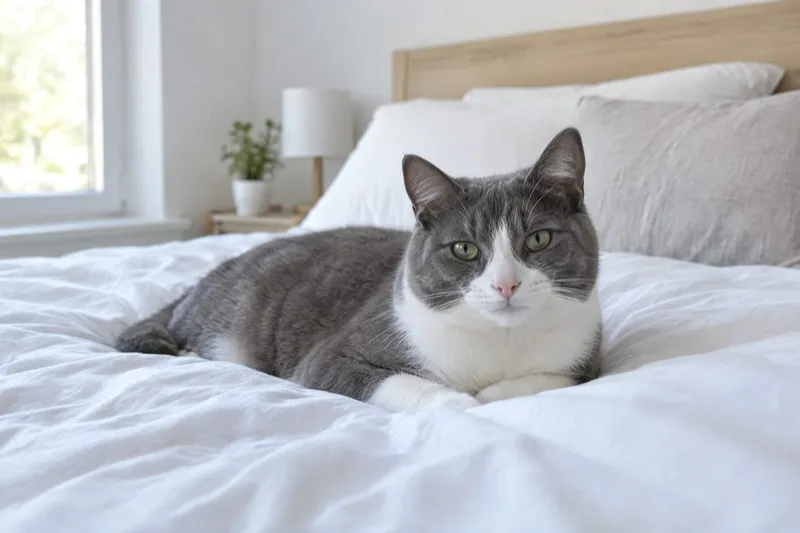
A wet patch on the bed isn't spite, and in some cases it could signal a genuine emergency. Repeated straining with little or no urine means every minute counts before you call the vet.
Key takeaways
- Not spite. A cat urinating on the bed usually signals pain, illness, a litter-box problem, stress or a learned preference.
- Know the emergency sign. Repeated straining with little or no urine is a veterinary emergency, especially in male cats, and needs immediate attention rather than home monitoring.
- Start with the vet. A physical exam and urinalysis are the usual starting points, with further tests depending on what the vet finds.
- Fix the litter box. Large boxes, soft unscented litter, daily scooping and one box per cat plus one spare, placed in quiet, easy-to-reach spots.
- Clean it properly. An enzymatic cleaner made for pet urine breaks down what soaks deep into mattress fibers, while common household cleaners tend to fall short.
In this guide
Finding a wet patch on the comforter is upsetting, but it rarely means a cat has turned nasty or started acting out on purpose. The behavior almost always has a traceable cause, and working through it calmly and methodically gives the best chance of a lasting fix.
Your Cat Isn't Being Spiteful
Cats don't connect urinating on a bed with getting back at an owner for a missed meal, a vet visit or time spent away from home. House-soiling is a signal rather than an act of defiance, and it can point to bladder pain, illness, a litter box that no longer works for that cat, tension with another cat in the house, or stress that has built up over time.
Treating the behavior as a message to decode, rather than a problem to punish, changes the whole approach. Getting the sequence right matters, because jumping straight to a new litter brand or a stern telling-off skips over the possibility that something is genuinely wrong.
The reasons behind bed urination fall into a handful of broad categories: physical pain or illness, litter-box dissatisfaction, social friction with other cats, and stress or habit. Working through these systematically, starting with the most urgent possibilities, is the fastest route back to a dry bed.
When Bed Urination Is an Emergency
Most cases of bed urination are not emergencies, but a small number are, and recognizing the difference can be lifesaving. The warning sign to watch for is repeated, unproductive attempts to urinate rather than a single normal-looking puddle.
Go to the vet now if you see
- Repeated straining with little or no urine. A cat that keeps visiting the litter box, squatting and producing only drops or nothing at all may have a blocked urethra.
- Crying out or licking at the genital area
- Becoming withdrawn and weak
Straining With Little or No Urine
A blocked urethra is a genuine emergency, and it can be mistaken for constipation because the posture looks similar. A blocked cat needs immediate veterinary care rather than a wait-and-see approach at home, since the situation can deteriorate quickly as waste products build up in the bloodstream.
Why Male Cats Are at Higher Risk
Male cats face a much higher risk of urethral obstruction because their urethra is narrower and longer than a female cat's, making it easier for crystals, inflammatory debris or small plugs to cause a complete blockage. Any male cat straining repeatedly in the litter box, crying out, licking at the genital area, or becoming withdrawn and weak deserves urgent attention rather than overnight monitoring. Once a blockage is confirmed, a veterinarian may need to relieve it and leave a urinary catheter in place for a few days while swelling settles.
7 Reasons Cats Pee on the Bed
Once an emergency has been ruled out, it helps to understand the range of possible causes. Similar-looking accidents can stem from very different problems, so working through each possibility with a vet is more reliable than guessing from the mattress alone.
1. Bladder Pain or Inflammation
Inflammation of the bladder lining can make urination suddenly painful or urgent, pushing a cat to go wherever it happens to be resting rather than making it to the box in time. A cat that associates the litter box itself with discomfort may start avoiding it altogether, seeking out a soft surface like the bed instead. Addressing the discomfort and rebuilding a positive association with the litter box both matter here.
2. Stones, Infection or Kidney and Diabetes Issues
Bladder stones, urinary tract infections, chronic kidney disease and diabetes can all produce similar outward signs, including straining, blood in the urine, or sudden accidents around the house. Kidney disease and diabetes tend to increase the volume of urine a cat produces, sometimes faster than the cat can get to a box, while stones and infections are more likely to cause pain and urgency. A urinalysis and bloodwork are typically needed to tell these apart, since the symptoms alone don't reveal which condition is responsible.
3. Arthritis and Cognitive Changes
Older cats can develop arthritis that makes climbing into a high-sided litter box, moving through stairs, or jumping down from a tall bed genuinely painful. Rather than endure that discomfort, an arthritic cat may simply go where it is already lying. Cognitive changes in senior cats can compound the problem, affecting memory and spatial awareness in ways that disrupt previously reliable litter-box habits.
4. Litter-Box Aversion
Cats can be surprisingly particular about their toileting setup, and dissatisfaction with the box itself is one of the most common behavioral causes of house-soiling. A box that is too small, left uncleaned, filled with strongly scented litter, or positioned somewhere noisy or hard to reach can all push a cat to look elsewhere. Even a box that another cat tends to block or ambush near can become a place to avoid.
5. Social Conflict With Other Cats
Tension between cats in the same household rarely looks like open fighting. It is more often subtle: one cat staring down another, blocking a hallway, or hovering near the litter box in a way that discourages a more timid housemate from using it. A cat that feels unsafe approaching the usual toileting spot may retreat to a quieter, more private area such as the bedroom instead.
6. Stress
Changes around the home, such as new furniture, a recent move, unfamiliar visitors, or outdoor cats visible through a window, can all contribute to stress that shows up as house-soiling. Our guide to cat peeing everywhere after moving house covers the stress side in more depth.
7. A Learned Bed Preference
Sometimes the pattern becomes a habit in its own right: a cat that once avoided the box during a painful episode may keep choosing the bed afterwards simply because it has become the familiar option, even once the original medical trigger has resolved.
Getting a Veterinary Diagnosis
Because so many of these causes produce overlapping signs, a veterinary assessment is the only reliable way to work out what is actually going on. Booking an appointment promptly, rather than trialling home remedies first, gives the best chance of catching a treatable medical cause early.
What the Exam and Urinalysis Involve
A typical starting point includes a full physical examination, checking the bladder for size and tenderness, the joints for stiffness, and general body condition, alongside a urinalysis that looks at concentration, blood, inflammatory cells and crystals. Depending on what turns up, a veterinarian may follow this with blood tests, a urine culture, or imaging such as X-rays or ultrasound to look for stones or other structural issues. Straining, blood or frequent small urinations can look alike across several conditions, so none of these signs alone can reliably point to a specific diagnosis without this kind of testing.
Keeping a Pattern Log for Your Vet
A simple written log kept over several days can give a vet valuable clues to work from. Useful details include:
- The approximate time and frequency of each accident
- Roughly how much urine was produced, and whether it looked like a small spot or a full puddle
- The exact location chosen, and whether it keeps recurring in the same spot
- Whether the cat is still using the litter box at all, and how often
- Posture during urination, including any straining, crying or prolonged squatting
- Any changes in drinking, appetite or energy levels
- Recent changes at home, such as new pets, visitors, furniture or a house move
Fixing the Litter-Box Setup
Once medical causes have been addressed or ruled out, the litter box itself often needs a closer look. Small adjustments to size, substrate and cleanliness can make a surprising difference to whether a cat chooses the box over the bed.
Size, Litter and Cleaning Basics
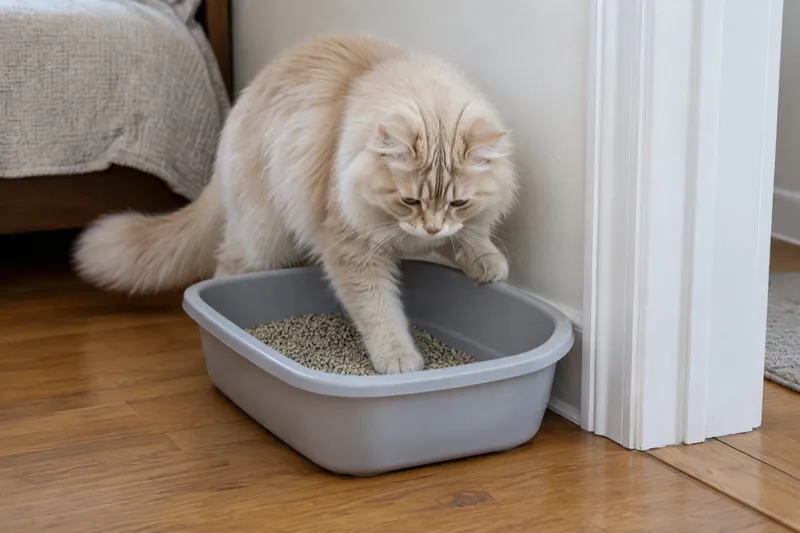
A generously sized, open box filled with soft, unscented litter tends to suit the widest range of cats, and daily scooping keeps it appealing rather than off-putting. In multi-cat households, the general guideline is one litter box per cat plus one extra, with boxes spread across separate locations rather than lined up side by side, since cats tend to treat clustered boxes as a single contested resource rather than independent options.
Placement for Older or Painful Cats
For cats dealing with arthritis or other mobility issues, a low-entry box placed close to a favorite resting spot removes much of the physical effort involved in reaching and using it. In a multi-story home, having a box available on each level that a cat spends time on avoids forcing a painful trip up or down stairs at an inconvenient moment.
Cleaning Urine Off the Mattress
Thorough cleaning matters just as much as fixing the cause, because leftover scent can draw a cat back to the same spot again and again. Fresh urine should be blotted rather than rubbed, since rubbing pushes it further into the mattress fibers rather than lifting it out.
An enzymatic or biological cleaner designed for pet urine is the best option, since it breaks down the compounds in urine rather than simply masking the smell (see how effective enzymatic cleaners are). Apply it according to the label, in enough volume to reach the same depth the urine soaked in, and allow the mattress to dry fully before covering it again to avoid trapping lingering odor. Ammonia-based cleaners are worth avoiding altogether, since ammonia is a component of urine itself and can actually encourage a cat to return to the same spot.
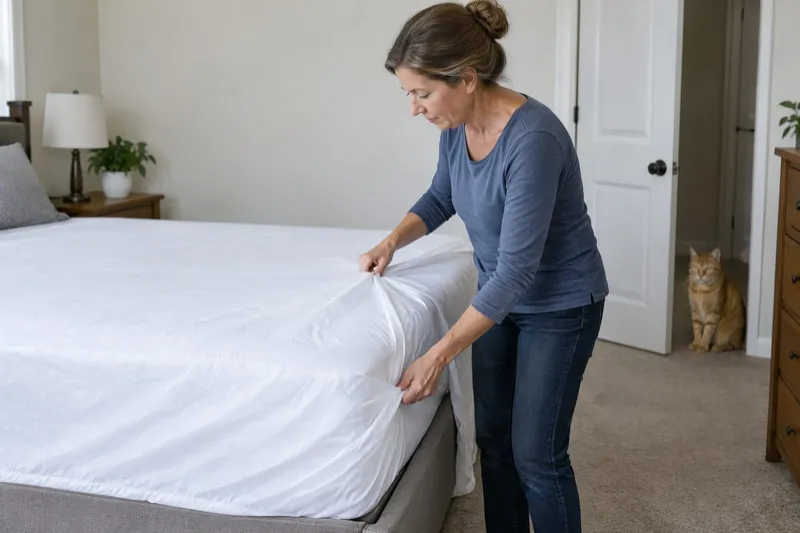
A waterproof mattress protector is a practical addition while the underlying cause is being resolved, giving some peace of mind without needing to restrict the cat from the bedroom entirely. For carpet and rugs, see our guide to getting cat pee out of carpet.
Lowering Stress to Stop Repeats
Even after medical treatment and a better litter-box setup, ongoing stress can keep the problem ticking over. Reducing competition for resources and giving a cat more predictability in its daily routine both help settle things down.
Practical steps include spreading out food, water, resting spots and litter boxes so no single cat can dominate access to all of them, and providing quiet retreats where a nervous cat can get away from a more assertive housemate. Blocking the view of outdoor cats through windows can also help where that is a trigger, and keeping departures and arrivals low-key can ease stress in cats prone to anxiety around an owner's absence. These changes work alongside medical treatment and a properly set-up litter box, rather than replacing either one.
Investigate First, Never Punish
Scolding, spraying with water, or otherwise punishing a cat after finding a wet patch on the bed does nothing to teach better toileting habits, and it can make an already stressed cat more anxious. A calmer, more effective approach starts with ruling out pain or illness, moves on to making the litter box genuinely easy and appealing to use, and addresses any stress or social tension sitting underneath the behavior.
Working through these steps in order, rather than reaching for a quick fix, gives the best chance of a lasting solution.

See The Clean Slate Protocol
Common Questions
Why is my cat suddenly peeing on my bed?
Most often it is pain, illness, a litter-box problem, stress or a learned preference, not spite. Bladder inflammation, stones, infection, kidney disease, diabetes and arthritis can all cause it, so a vet check comes first. Once medical causes are addressed or ruled out, look at the litter box setup, tension with other cats and sources of stress.
Is a cat peeing on the bed an emergency?
Sometimes. Repeated trips to the litter box with straining and little or no urine can mean a blocked urethra, especially in a male cat, and needs immediate veterinary care. Crying out, licking at the genital area, or becoming withdrawn and weak are also reasons to go straight to the vet. A single puddle without these signs is less urgent, but it still deserves a prompt appointment.
Is my cat peeing on the bed out of spite?
No. Cats do not link urinating on a bed with getting back at you for a missed meal, a vet visit or time away. House-soiling is a signal that something is wrong, such as pain, a box the cat dislikes, tension with another cat or stress. Punishing it does not teach better habits and can make an anxious cat worse.
How do I get cat urine out of a mattress?
Blot fresh urine with towels rather than rubbing, which pushes it deeper into the fibers. Then apply an enzymatic cleaner made for pet urine, following the label and using enough to reach the depth the urine soaked in, and let the mattress dry fully before covering it. Avoid ammonia-based cleaners, since ammonia is a component of urine itself and can draw a cat back to the same spot.
How can I stop my cat peeing on the bed?
Start with a vet exam and urinalysis. Then make the litter box easy to use: a large box with soft, unscented litter, scooped daily, with one box per cat plus one extra in separate, quiet spots. Add a low-entry box near favorite resting spots for older or arthritic cats, reduce stress and competition between cats, and never punish. A waterproof mattress protector can help while you work on the cause.
Sources: AAFP/ISFM house-soiling guidelines; American Veterinary Medical Association, Feline Lower Urinary Tract Disease. This guide is general information and is not veterinary advice: see your vet about any change in your cat's toileting.

Sophie Winslowe is a cat owner who spent 18 months researching and testing what actually helps with litter box problems, and turned it into The Clean Slate Protocol, a 30-day step-by-step plan.
Keep reading
- How to get cat pee out of carpet — blot, treat to the padding and stop the smell coming back.
- Senior cat peeing outside the litter box: causes and fixes — the red flags, the medical causes to rule out first and easier litter box set-up for older cats.
- Enzymatic cleaners: how effective are they? — how they work and how to use them.
- How Often to Scoop a Cat Litter Box (and Change It) — a daily scooping and full-change schedule.
Ready for a Fresh Start?
Get the full 30-day Clean Slate Protocol, with six bonus guides and a 60-day money-back guarantee.
Learn More© 2026 Sophie Winslowe. All rights reserved. Privacy Policy • Terms & Conditions
This article is for general information only and is not veterinary advice. We do not offer medical, legal or other professional advice. Always consult your veterinarian before acting on any information related to your cat's health or behavior. Results vary and are not guaranteed.