
Enzymatic Cleaners for Cat Urine: How Well Do They Really Work?
By Sophie Winslowe • Updated November 2026 • 9 min read
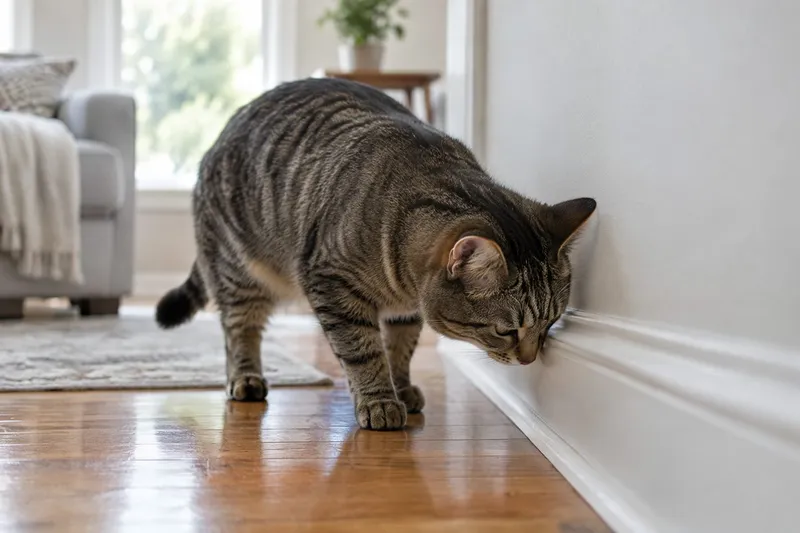
When a cat keeps peeing in the same spot, regular cleaning often feels like a losing battle. The smell comes back, the cat marks the spot again, and frustration builds for you both. Enzymatic cleaners take a different approach, and understanding how they work (and how to use them properly) makes the difference between a quick wipe-down and a spot that's truly reset.
Key takeaways
- Enzymes break urine down instead of masking it, which is why they work on odors that ordinary cleaners only cover up for a while.
- They're widely recommended by vets and pet-behavior experts as the best choice for cat urine odor.
- Technique matters: soak the whole area, give it time to work (10–15 minutes for fresh spots, hours for set-in stains), and let it air-dry.
- Scent cues drive repeat marking. Cats can smell traces you can't, so thorough cleaning helps break the cycle.
- Check the label. Some "natural" ingredients, such as citrus oils (d-limonene), can be harmful to cats.
In this guide
Enzymatic Cleaners Break Down Cat Urine at the Molecular Level
Enzymatic cleaners work through biological action: specific proteins (enzymes) take apart the molecules in cat urine rather than simply covering the smell. A good product contains several types of enzymes, including proteases, urease, lipases and cellulases, and each one targets a different part of the waste. Used correctly, they turn the stubborn crystalline residue left behind into carbon dioxide and ammonia, which then evaporate.
This is why enzymatic cleaners can succeed where others fail. Cat urine contains unique sulfurous compounds that make its smell especially persistent. Unlike surfactant-based cleaners that only lift surface debris, enzymes keep digesting the waste at its source for as long as the area stays moist. That makes them particularly useful for deep-set stains that have soaked through carpet padding or into subflooring.
Why Traditional Cleaners Fail on Cat Urine
Crystals resist water-based cleaning
Household cleaners hit a basic chemistry problem. The crystalline part of cat urine doesn't dissolve easily in water and bonds tightly to porous materials such as carpet fibers, concrete and wood. Those crystals act as odor reservoirs: when humidity changes they can re-activate and release smell again. That's why a "phantom" odor can return weeks, months or even years after you cleaned.
Water-based detergents only remove the water-soluble parts of urine. The smell may drop for a while, but the crystalline structure stays underneath, soaks up moisture and lets the odor come back at full strength.
Some household cleaners make things worse
Ammonia-based cleaners add to the ammonia that naturally forms in aging urine, which can create a scent cue that draws a cat back to the same place. Bleach reacts with urine to form toxic chloramine gas and may leave scents some cats find appealing for marking. Vinegar and baking soda, often suggested as home remedies, only treat surface odor and leave the deeper deposits untouched.
| Cleaning method | What it does to cat urine | Verdict |
|---|---|---|
| Enzymatic cleaner | Breaks down the residue at its source | Best choice (cat-safe formulas) |
| Vinegar & baking soda | Neutralizes surface odor only; leaves deeper deposits | Partial at best |
| Standard detergent / soap | Removes only the water-soluble part | Odor tends to return |
| Ammonia-based cleaner | Adds ammonia, a possible marking cue | Avoid |
| Bleach | Forms chloramine gas with urine; harsh and risky | Avoid |
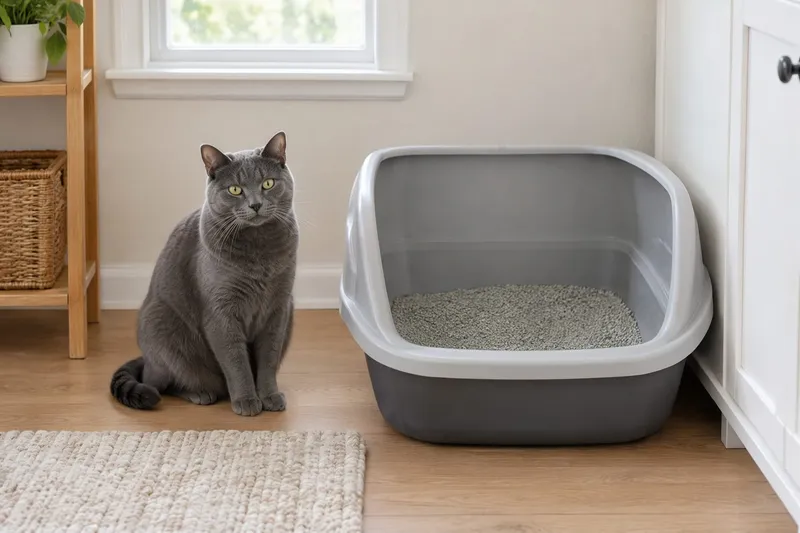
What's Inside a Good Enzymatic Cleaner
A blend of enzymes, each with a job
Effective products use a mix of enzymes aimed at different parts of urine. Proteases break down protein-based compounds such as cauxin, which cats use in territorial scent communication. Urease speeds the breakdown of urea into ammonia and carbon dioxide. Lipases tackle fatty residues that can form a barrier around crystals. Some formulas add cellulases, which work on damaged carpet fibers where odor molecules get trapped.
Beneficial bacteria keep working
Many higher-performance products contain dormant spores of beneficial bacteria, typically Bacillus species. When they touch a moist, organic surface, they wake up and make their own enzymes to digest the surrounding waste. This keeps the cleaning action going long after you've applied the product, which is especially helpful where urine has soaked into padding or concrete.
Cleaning that only your nose approves of isn't enough, because your cat's nose is far more sensitive than yours.
How to Use an Enzymatic Cleaner Properly: 4 Steps
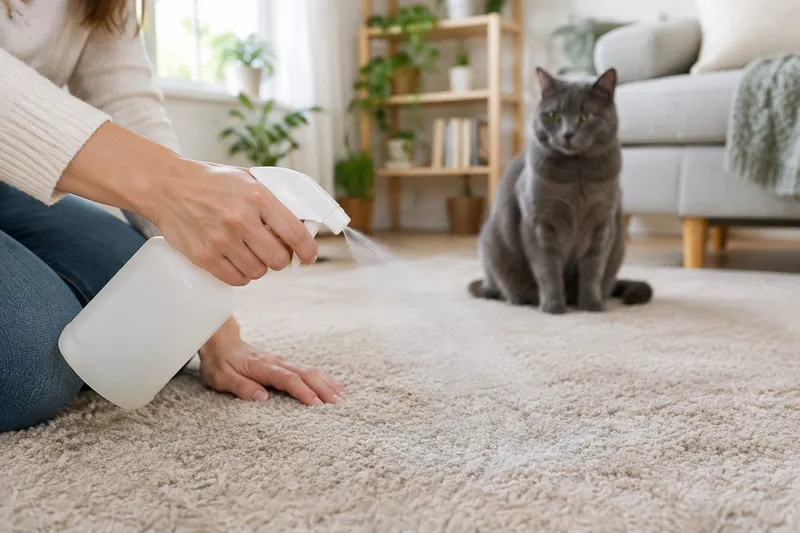
How long should you leave it?
Illustrative only, not to scale. Always follow the directions on your product's label.

See The Clean Slate Protocol
Breaking the Cycle of Repeat Marking
Remove the scent cues that trigger it
Cats can smell up to around 14 times better than we can, so they pick up urine traces that are invisible and odorless to people. Those traces work as territorial messages, signaling an appropriate toilet spot or an area of conflict. That's why simply masking the smell rarely stops the habit, while thoroughly breaking the urine down removes the cues that keep the pattern going and gives other changes a chance to work.
Why stress and urinary problems feed each other
Conditions such as Feline Lower Urinary Tract Disease (FLUTD) and Feline Idiopathic Cystitis (FIC) often involve stress-related inflammation that makes cats avoid the litter box. Leftover urine odor from earlier accidents can act as a constant stressor, so stress can worsen symptoms and discomfort can lead to more accidents. A big change such as moving house is a common trigger. If that is what happened, see how to tell stress from a medical problem after a move.
Breaking that cycle takes veterinary care for any underlying condition and thorough cleaning of the environment. Enzymatic cleaners support medical treatment by removing scent-based stressors, and work best alongside good litter box management and stress reduction.
When to call your vet
- Your cat is straining, crying or going back and forth to the litter box with little or no urine. This can be an emergency, especially in male cats.
- You see blood in the urine, or your cat is licking the area a lot.
- The accidents started suddenly or came with changes in appetite, energy or thirst.
Safety Considerations When Using Enzymatic Cleaners Around Cats
Look for
- Formulas made for pets, with a clear ingredient list
- Fragrance-free or lightly scented options
- Labels that state they are safe once dry
Avoid
- D-limonene and other citrus oils
- Pine, eucalyptus and tea tree oils
- Phenols and strong synthetic fragrances
Why d-limonene is a problem
Many enzymatic products add d-limonene or other citrus oils for fragrance and extra antimicrobial action. Cats lack an enzyme (glucuronosyltransferase) that helps break these compounds down, so they can be toxic even in small amounts. Breathing them in or licking them off paws while grooming can cause vomiting, neurological symptoms and liver damage. Pet-safety groups such as the ASPCA caution against citrus-based concentrates and essential oils in homes with cats, so read labels carefully.
Keep cats away while it's wet
Enzymes are proteins and can irritate airways if inhaled as a fine mist. Keep cats out of the room while surfaces are wet, ventilate well during application and drying, and let the area dry fully before letting them back in. Once dry, enzymatic residue is generally inert.
The Bottom Line
Enzymatic cleaners are commonly recommended by vets and pet-behavior experts because thorough odor removal supports both medical treatment and behavior change. Used properly, with full saturation, enough dwell time and air-drying, they remove the scent cues that keep drawing your cat back to the same spot. They're an important piece of the puzzle, alongside veterinary care, a comfortable litter box setup and lower stress at home.
Common Questions
Do enzymatic cleaners really get rid of cat urine smell?
When used properly, they're one of the most effective options, because they break down the residue that causes the odor instead of covering it. Old or deeply soaked spots may need longer contact time or more than one treatment.
Can I use vinegar or baking soda first?
It's best to go straight to an enzymatic cleaner. Vinegar and baking soda only deal with surface odor, and some people find they interfere with enzymes if used beforehand.
How long should I leave the cleaner on?
Fresh accidents may need only 10–15 minutes of contact, while set-in stains can need several hours or more. Keep the area damp and follow the label directions for your product.
Are enzymatic cleaners safe for cats?
Many are, but check the ingredients. Avoid products with d-limonene, other citrus oils, pine, eucalyptus, tea tree oil, phenols or strong fragrance. Keep cats out of the area until it has dried completely.
Will an enzymatic cleaner alone stop my cat peeing outside the litter box?
Not always. It removes the scent cues, but accidents can also come from stress, litter box setup or a medical issue. A vet check plus changes to the environment give the best chance of lasting results.
Sophie Winslowe is a cat owner who spent 18 months researching and testing what actually helps with litter box problems, and turned it into The Clean Slate Protocol, a 30-day step-by-step plan.
Keep reading
- Cat peeing everywhere after moving house: medical risk vs stress triggers — what to rule out with your vet first, and how to settle a cat into a new home.
- How to get cat pee out of carpet (and stop the smell coming back) — a step-by-step cleanup, from blotting a fresh accident to dealing with the padding.
- Cat peeing on bed: 7 reasons why and what to do — the emergency sign to watch for, how to clean a mattress and how to stop it.
- Best Black Light for Cat Urine — how to pick a UV flashlight and sweep a dark room to find hidden spots.
Ready for a Fresh Start?
Get the full 30-day Clean Slate Protocol, with six bonus guides and a 60-day money-back guarantee.
Learn More© 2026 Sophie Winslowe. All rights reserved. Privacy Policy • Terms & Conditions
This article is for general information only and is not veterinary advice. We do not offer medical, legal or other professional advice. Always consult your veterinarian before acting on any information related to your cat's health or behavior. Results vary and are not guaranteed.