
Cat Peeing Everywhere After Moving House: Medical Risk vs Stress Triggers
By Sophie Winslowe • Updated November 2026 • 8 min read
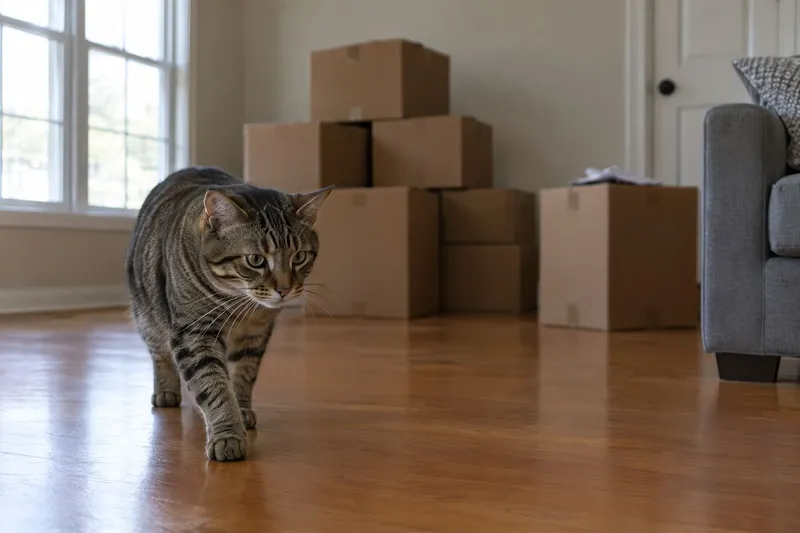
Your cat just moved house and suddenly won't use the litter box. Before blaming stress, there's one warning sign in male cats especially that signals a life-threatening emergency rather than a simple adjustment period.
A new house smells wrong, sounds wrong, and holds none of the familiar scent markers a cat relies on to feel safe. That alone explains why a cat might start peeing outside the box in the days after a move. Painful or dangerous urinary disease can produce the exact same symptoms, so sorting out which one is happening determines whether the next move should be a vet visit or a cozy new routine.
Key takeaways
- Stress or something medical? A cat suddenly peeing outside the litter box after a move can be reacting to stress, but the same behavior can also point to painful bladder inflammation, stones, infection, or other urinary tract trouble.
- Know the emergency sign. Repeated straining with little or no urine, especially in a male cat, counts as an emergency. Vomiting, weakness, or marked lethargy alongside urinary trouble calls for immediate veterinary care.
- Vet first. A veterinarian should check new house-soiling with an exam and urinalysis before anyone labels it a behavior problem tied to the move.
- Then settle your cat in. A safe room with familiar bedding, hiding spots, and a solid litter box setup can ease the adjustment once medical causes are ruled out, with a clear path for gradually expanding territory.
- Mind your cleaning. The wrong product can actually encourage a cat to return to the same spot.
In this guide
Check for Urinary Emergency Signs Now
Before reading another word about stress or litter boxes, take a moment to watch the cat's next attempt to urinate. Repeated trips to the box with little or no urine coming out, especially in a male cat, can signal a urethral blockage, which is a life-threatening emergency that needs immediate veterinary attention. Vomiting, weakness, marked lethargy, crying out, or a painful, tense abdomen alongside urinary straining are also signs that demand emergency care rather than a wait-and-see approach.
Go to a vet now if you see
- Repeated straining or trips to the box with little or no urine, especially in a male cat
- Vomiting, weakness or marked lethargy along with urinary trouble
- Crying out or a painful, tense abdomen
Even when urine is still passing, some signs deserve a same-day or very prompt visit instead of a trip to the emergency clinic. Frequent small urinations, blood in the urine, visible pain, vocalizing while in the box, or excessive genital licking all point toward lower urinary tract trouble that a veterinarian needs to evaluate soon.
A cat that seems to be urinating normally, with no straining, blood, or distress, and is otherwise eating, grooming, and acting like itself still deserves a veterinary exam soon. New house-soiling should never be assumed to be purely behavioral just because the timing lines up with a move.
Why a Move Alone Doesn't Explain Cat Peeing Outside the Box
A move changes nearly everything a cat uses to understand its world: scent markers on furniture, the location of food and water, familiar hiding spots, and the daily rhythm of the household. Those losses are real stressors, and they can contribute to litter box problems. Stress and disease produce overlapping symptoms, so an owner cannot reliably tell them apart just by watching behavior for a few days.
How relocation stress affects the bladder
Stress is more than an emotional experience for cats; it can physically affect bladder health. In cats prone to lower urinary tract disease, an unfamiliar environment can trigger inflammation of the bladder lining, a condition often grouped under feline idiopathic cystitis. The irritation this creates can cause frequent urination, visible discomfort, and house-soiling that looks behavioral but has a physical driver underneath it. This is exactly why moving can plausibly trigger urinary symptoms while still requiring medical attention rather than stress-reduction tactics alone.
Spraying vs ordinary accidents
Two different patterns tend to show up after a move, and telling them apart can help guide next steps. Spraying usually involves a cat standing upright with its tail raised and quivering, depositing a small amount of urine on a vertical surface such as a wall or door frame. Ordinary accidents more often involve squatting on a horizontal surface, like a carpet or bed, with a noticeably larger puddle left behind.
Spraying
- Posture: standing, tail raised and quivering
- Surface: vertical, like a wall or door frame
- Amount: usually a small amount
Ordinary accident
- Posture: squatting
- Surface: horizontal, like carpet or a bed
- Amount: usually a larger puddle
Neither pattern rules disease in or out on its own. A cat that sprays can still have a bladder infection, and a cat passing large puddles outside the box might simply be marking new territory in an unfamiliar home. Watching posture and location can offer useful clues for a veterinarian, but it should never replace an actual exam.
What a Vet Visit Should Involve
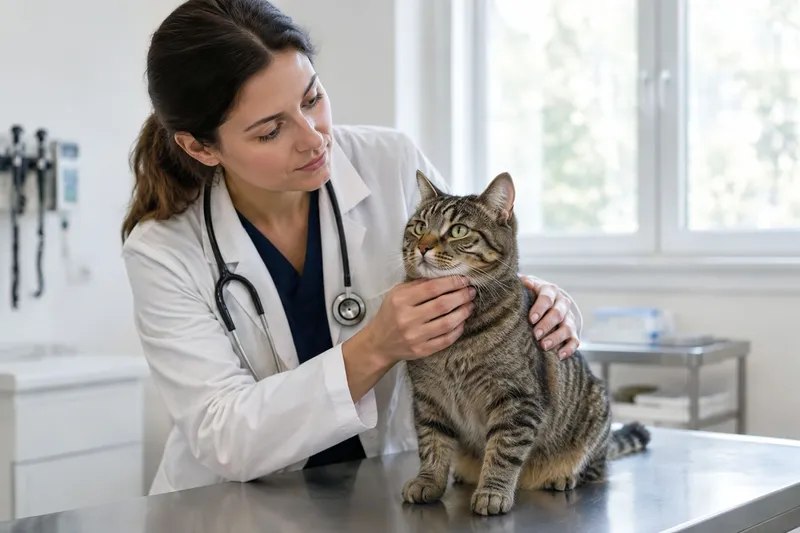
A proper veterinary assessment for new house-soiling typically starts with a physical exam, during which the veterinarian checks the bladder for pain or distension and evaluates overall body condition. A urinalysis is a standard next step, since it can reveal signs of infection, inflammation, crystals, or blood that would not be visible from watching the cat's behavior alone.
Depending on what the initial exam and urinalysis turn up, further testing such as imaging or a urine culture may be recommended. Bringing a fresh urine sample to the appointment, if one can be safely collected beforehand, can also speed up the process. Treating the visit as a baseline checkup rather than a last resort makes it far more likely that a treatable medical cause gets caught early, before it turns into something more serious or gets mistaken for a simple stress response.
Building a Safe Room After Clearance
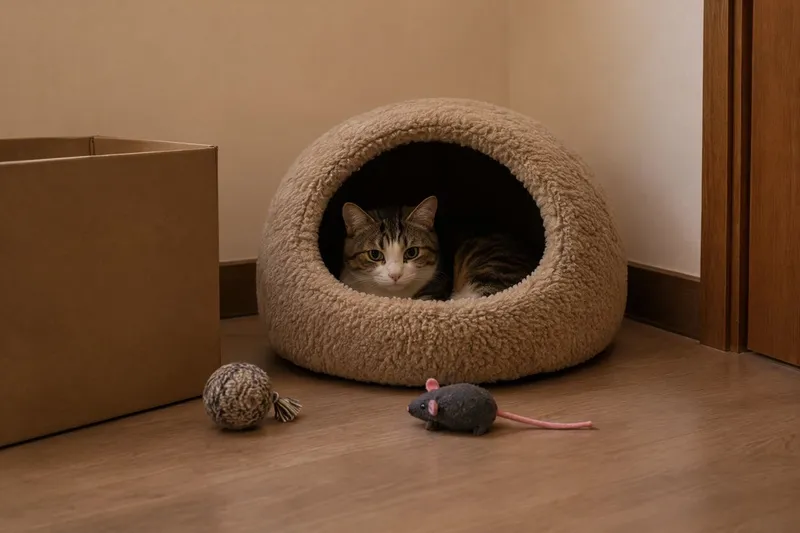
Once a veterinarian has ruled out or begun treating anything medical, attention can shift toward helping the cat settle into the new home. Rather than letting a stressed cat roam the entire house right away, setting up one quiet room as a home base tends to work far better. This space should include familiar bedding, a hiding spot such as a covered bed or cardboard box, and a few of the cat's favorite toys, all of which help recreate a sense of safety in an unfamiliar place.
Resetting the litter box setup
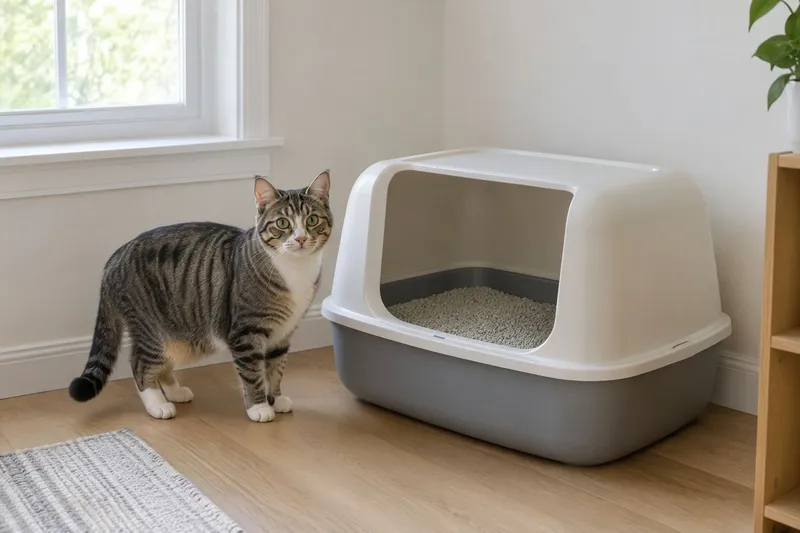
Litter box setup matters just as much as the room itself. A practical starting point is one litter box per cat plus one extra, placed in separate, easily accessible locations rather than clustered together. Unscented litter tends to work better than scented varieties, since strong fragrances can discourage some cats from using the box. Scooping daily keeps the box appealing and reduces the odds of a cat deciding the box is too dirty to bother with.
A few other details can make a real difference during this adjustment period:
- Keep litter boxes away from loud appliances or high-traffic walkways that might startle a cat mid-use
- Choose a box large enough for the cat to turn around comfortably, not just squeeze into
- Avoid switching litter brands or textures abruptly, since cats often have strong preferences
- Place at least one box on each floor if the new home has multiple levels
See The Clean Slate Protocol
Expanding territory gradually
Once the cat seems calm in the safe room, eating normally, grooming, and using the litter box consistently, it can be introduced to the rest of the house gradually. Opening one additional room at a time, rather than the whole house at once, gives the cat a chance to build confidence in manageable steps. If signs of stress return, such as hiding more than usual or avoiding the litter box again, it can help to slow down and spend more time in the smaller space before trying again.
Cleaning Up Without Making It Worse
How accidents get cleaned matters nearly as much as where the litter boxes are placed. Leftover urine odor can draw a cat right back to the same spot, so a proper cleanup strategy focuses on neutralizing the scent completely rather than just mopping up the visible mess. Enzymatic pet-urine cleaners are built specifically for this job, breaking down the compounds in cat urine that ordinary soap and water tend to miss. (Here's how enzymatic cleaners work and how to use them properly.)
Do
- Use an enzymatic pet-urine cleaner
- Neutralize the scent completely
- Stay patient
Don't
- Use ammonia-based cleaners
- Yell at or scruff your cat
- Carry your cat to the scene of the mess
Ammonia-based cleaners should be avoided entirely, since the ammonia smell can resemble urine to a cat's nose and encourage repeat visits to the same location. Punishing a cat for an accident, whether through yelling, scruffing, or being carried to the scene of the mess, does not teach the right lesson and often makes a cat more anxious, which can lead to more accidents rather than fewer. Patience paired with the right cleaning product tends to resolve lingering odor problems far more effectively than frustration ever could.
Medical Checks Come Before Behavior Fixes
It bears repeating, since it is the single most important point in managing this situation: medical evaluation always comes before behavioral troubleshooting. A cat peeing outside the box after a move might simply be unsettled by the change, but that conclusion should only be reached after a veterinarian has had the chance to rule out painful or dangerous conditions. Skipping that step risks mistaking a treatable illness for a passing phase, which can allow real suffering to continue unnecessarily.
Once the medical side is handled, addressing stress and environment becomes far more straightforward, and most cats settle into a new home with a bit of patience and the right setup.
Common Questions
Why is my cat peeing outside the litter box after moving house?
It can be stress from losing familiar scents, hiding spots and routines, but the same behavior can also point to painful bladder inflammation, stones, infection or other urinary tract trouble. Because the two overlap, a vet should check new house-soiling before it is put down to the move.
When is a cat peeing problem an emergency?
Repeated straining or trips to the box with little or no urine, especially in a male cat, can signal a urethral blockage and needs immediate veterinary attention. Vomiting, weakness, marked lethargy, crying out or a painful, tense abdomen alongside urinary straining also call for emergency care.
Should I take my cat to the vet before treating it as stress?
Yes. A veterinarian should check new house-soiling with a physical exam and urinalysis before it is labeled a behavior problem. This applies even when the cat seems to be urinating normally and is otherwise acting like itself.
How many litter boxes does a cat need in a new home?
A practical starting point is one litter box per cat plus one extra, placed in separate, easily accessible locations rather than clustered together. Unscented litter and daily scooping help, and a multi-level home should have at least one box on each floor.
What should I use to clean up accidents after a move?
Use an enzymatic pet-urine cleaner, which breaks down compounds in cat urine that ordinary soap and water tend to miss. Avoid ammonia-based cleaners, since the smell can resemble urine to a cat, and don't punish your cat for accidents.

Sophie Winslowe is a cat owner who spent 18 months researching and testing what actually helps with litter box problems, and turned it into The Clean Slate Protocol, a 30-day step-by-step plan.
Keep reading
- Enzymatic cleaners: how effective are they? — how they break down cat urine, how to use them properly, and what to avoid.
- How to get cat pee out of carpet (and stop the smell coming back) — a step-by-step cleanup, from blotting a fresh accident to dealing with the padding.
- Cat peeing on bed: 7 reasons why and what to do — the emergency sign to watch for, how to clean a mattress and how to stop it.
Ready for a Fresh Start?
Get the full 30-day Clean Slate Protocol, with six bonus guides and a 60-day money-back guarantee.
Learn More© 2026 Sophie Winslowe. All rights reserved. Privacy Policy • Terms & Conditions
This article is for general information only and is not veterinary advice. We do not offer medical, legal or other professional advice. Always consult your veterinarian before acting on any information related to your cat's health or behavior. Results vary and are not guaranteed.