
How Often to Scoop a Cat Litter Box (and Change It)
By Sophie Winslowe • Updated November 2026 • 8 min read
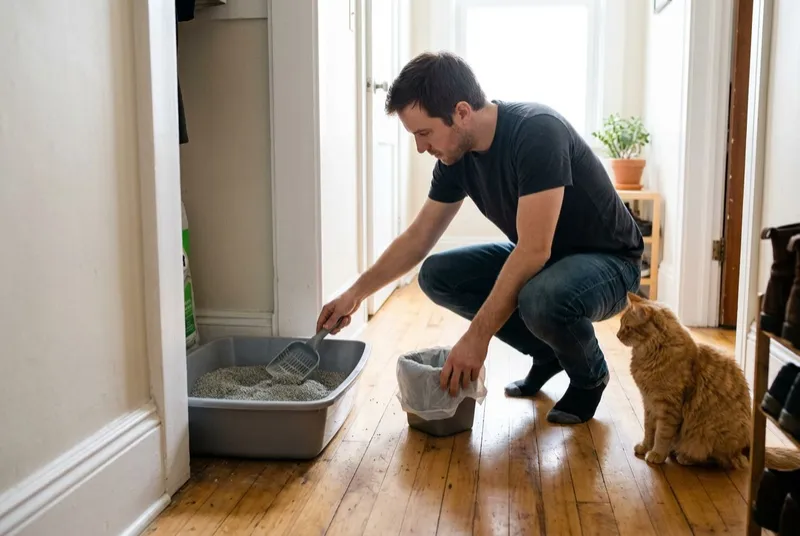
A litter box can look fine from across the room and still be overdue for a scoop. Cats usually notice before people do, and a box that is not kept clean is one of the most common reasons a cat starts using somewhere else.
The simple answer is to scoop at least once a day, and twice if you can. Full litter changes are a separate job on a separate schedule. Here is how both work, plus the health reasons that make daily scooping worth the habit.
Key takeaways
- Scoop solid waste and urine clumps at least once a day. Twice a day (morning and evening) is a good target, especially in multi-cat homes.
- A full change is weekly to every 4 weeks. Weekly is the more common recommendation and the safer choice for multi-cat homes; a single cat on good clumping litter may manage longer.
- Toxoplasma is not infectious right away. It takes 1 to 5 days, which is why the CDC advises cleaning the box daily.
- Pregnant or immunocompromised? Ask your doctor, and have someone else scoop if you can.
- Watch what you scoop. A sudden change in clumps or stools is worth a call to your vet.
In this guide
Scoop Daily, Twice If You Can
Solid waste and urine clumps should come out of the box at least once every day. For many households, once is the realistic minimum, and twice, a morning pass and an evening pass, is the target worth aiming for, especially if your cat is picky about a soiled box or shares it with another cat.
How often a box really needs attention depends on how many cats use it, what litter is in it, and how fussy each cat is. Cats have a far stronger sense of smell than we do, so a box that seems fine to you can be unpleasant for the cat who has to stand in it. Consistent scooping keeps the box genuinely inviting instead of merely tolerable.
When you scoop, slide the scoop under each clump and lift it out whole. Chopping through a wet clump breaks it into crumbs that sink and sour the litter underneath. Seal the waste in a bag and put it in the trash.
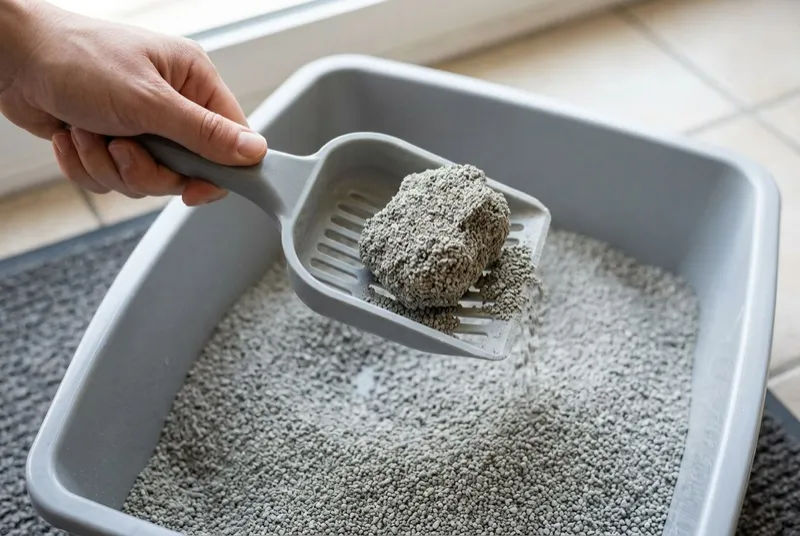
Do not flush cat feces
Even with litter labeled flushable, wastewater treatment is not reliably able to destroy Toxoplasma. Bag it and put it in the household trash.
The Toxoplasma Window: Why Daily Matters
Toxoplasma gondii is a parasite that cats can pass in their feces, usually for only a short time after they first become infected. When it is first passed, it is not infectious. The CDC says it does not become infectious until 1 to 5 days after the cat sheds it. Cleaning the box every day removes the feces before it gets that far.
If you are pregnant or have a weakened immune system
Ask your doctor about litter box duty. The CDC advises that a person who is pregnant or immunocompromised have someone else change the litter if possible. If you have to do it yourself, wear disposable gloves, scoop daily, and wash your hands well with soap and water afterward. Keeping your cat indoors and feeding cooked or commercial food also lowers the chance of your cat picking the parasite up in the first place.
What Daily Scooping Tells You About Your Cat's Health
Scooping every day doubles as a quiet health check. Noticing changes early gives you something specific to tell your vet.
- A sustained increase in the size or number of urine clumps can be worth a vet visit.
- Loose stools that last more than a day or two are worth tracking rather than ignoring.
- Blood, a very strong smell, or hesitation and discomfort in the box deserve prompt attention.
Go to an emergency vet now if you see
- Straining in the box with little or no urine, especially in a male cat
- Repeated trips, crying out or licking at the genital area
- Vomiting, hiding or weakness along with any of the above
Scooping vs the Full Litter Change
Scooping removes the obvious waste. A full change means emptying the box completely, washing it and refilling it with fresh litter. Both matter, but they run on different schedules.
| Situation | Full change (empty, wash, refill) |
|---|---|
| General guidance (AAFP/ISFM) | Every 1 to 4 weeks |
| Many shelters and cat charities | Weekly |
| One cat, good clumping litter | Often every 2 to 4 weeks, weekly if you can |
| Non-clumping litter | Every few days to weekly |
| Multi-cat home | Weekly or sooner |
If you only remember one number, make it weekly. It is the more common recommendation and the safer choice for multi-cat homes, while a longer interval suits some single-cat homes with clumping litter. Change sooner if the box smells soon after scooping, the clumps crumble instead of lifting out whole, or the litter feels damp or caked to the bottom.
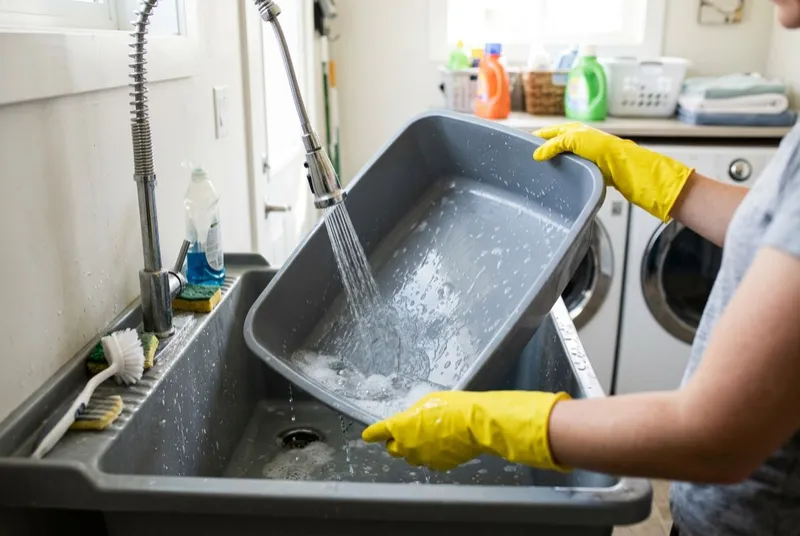
How to wash the box
Wear gloves, empty the box into a trash bag and scrub it with hot water and a mild, unscented dish soap. Rinse well, dry it completely, then refill with unscented litter to your cat's preferred depth. Skip strong-smelling cleaners, and never mix bleach with urine, because the fumes are harmful.
What changes your schedule
Warm, humid weather can make odor build faster, and plant-based litters in particular can turn sour sooner in damp rooms. More cats, a bigger cat or a cat that drinks and urinates more all mean more waste in the box, so scoop and change on a tighter schedule. Watching how your cat responds over a week or two is a better guide than any calendar.
Multi-Cat Homes
More cats means more waste, so scoop at least twice a day and change the litter fully on the shorter end of the range. A common starting point is one box per cat plus one extra, set up in different rooms or on different floors instead of side by side, so one cat cannot guard the only clean box.
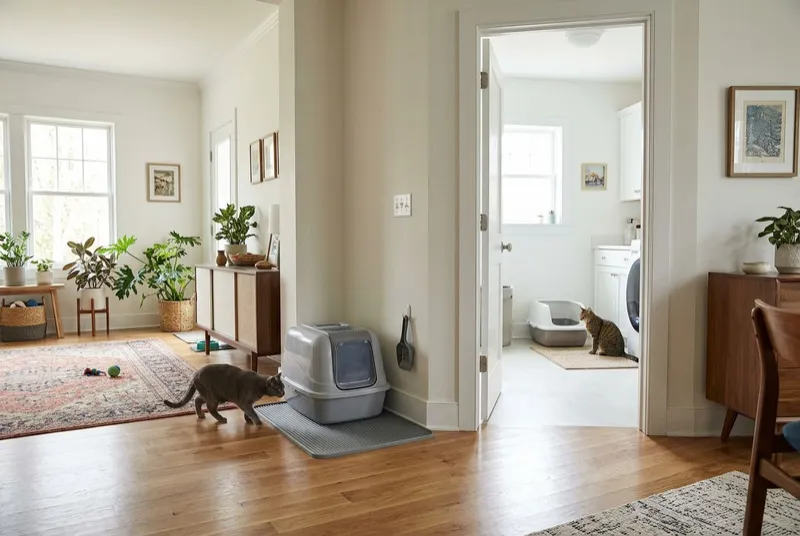
If a Clean Box Still Gets Avoided
A spotless box that still gets ignored is rarely about stubbornness. Work through the likely causes one at a time:
- Too few boxes for the number of cats
- A box that is too small, too enclosed or hard to step into
- A litter type or scent the cat dislikes
- A location that feels exposed, noisy or hard to reach
- A health problem, such as a urinary issue, that makes the box uncomfortable
Never punish a cat for an accident. For older cats, see our guide to senior cats peeing outside the litter box, and if the problem is a bed or couch, read why cats pee on the bed. The litter box set-up chapter in The Clean Slate Protocol (Module 3) walks through box size, number and placement step by step.
Common Questions
How often should I scoop my cat's litter box?
At least once a day, and twice a day (morning and evening) is a good target, especially if your cat is fussy or the box is shared. Remove solid waste and urine clumps each time.
How often should I change all the litter?
A full change means emptying the box, washing it and refilling it. Recommendations range from weekly to every 4 weeks. Weekly is the more common recommendation and the safer choice for multi-cat homes. A single cat on good clumping litter may do well on 2 to 4 weeks, and non-clumping litter needs changing more often, from every few days to weekly. Change sooner if the box smells soon after scooping or the clumps crumble.
Is it safe to scoop the litter box while pregnant?
Ask your doctor first. Health agencies such as the CDC advise that a pregnant person or anyone with a weakened immune system have someone else do the scooping if possible. If you must do it, wear disposable gloves, scoop daily and wash your hands well with soap and water afterward.
Why does scooping daily matter for Toxoplasma?
The parasite is not infectious when a cat first passes it. The CDC says it takes 1 to 5 days before it can infect, so scooping every day removes the feces before then. Only cats that have recently become infected shed it, and usually only for a short time, but daily scooping is a simple habit that lowers the risk.
My cat avoids a clean litter box. What else could it be?
Check the number, size and location of the boxes, the litter type and scent, and whether the box is easy to reach and enter. Pain or a urinary problem can also make the box uncomfortable, so see your vet if the change is sudden or repeats.

See The Clean Slate Protocol
Keep reading
- Senior cat peeing outside the litter box — causes, vet checks and easy box changes.
- Cat peeing on bed: 7 reasons why and what to do — the emergency sign, causes and how to clean a mattress.
- How to get cat pee out of carpet — blot, treat to the padding and stop the smell coming back.

Sophie Winslowe is a cat owner who spent 18 months researching and testing what actually helps with litter box problems, and turned it into The Clean Slate Protocol, a 30-day step-by-step plan.
Ready for a Fresh Start?
Get the full 30-day Clean Slate Protocol, with six bonus guides and a 60-day money-back guarantee.
Learn More© 2026 Sophie Winslowe. All rights reserved. Privacy Policy • Terms & Conditions
This article is for general information only and is not veterinary advice. We do not offer medical, legal or other professional advice. Always consult your veterinarian before acting on any information related to your cat's health or behavior. Results vary and are not guaranteed.